Walk into almost any company and ask what they’re doing with AI. You’ll get a list. A notetaker on the calls. A copilot in the docs. A chatbot on the site. Something in the CRM nobody has opened since March. An SDR tool someone bought at a conference.
That isn’t an AI company. That’s twelve copilots, each with its own little memory, none of which talk to each other. Every one of them learns something real about your business — then takes it to the grave.
Here’s the test. Ask any of them a boring question that requires last Tuesday: why did we pass on that vendor? What did this customer complain about in June? Who owns this now?
None of them can answer. They’re brilliant and amnesiac. Not because the models are weak — the models are extraordinary. Because nothing in the company is writing anything down somewhere they can all read.
One piece is load-bearing: the company brain. One place that holds your decisions, customers, people, projects, and current state. Everything else is an interface onto it. Build that first or nothing compounds — you just accumulate subscriptions.
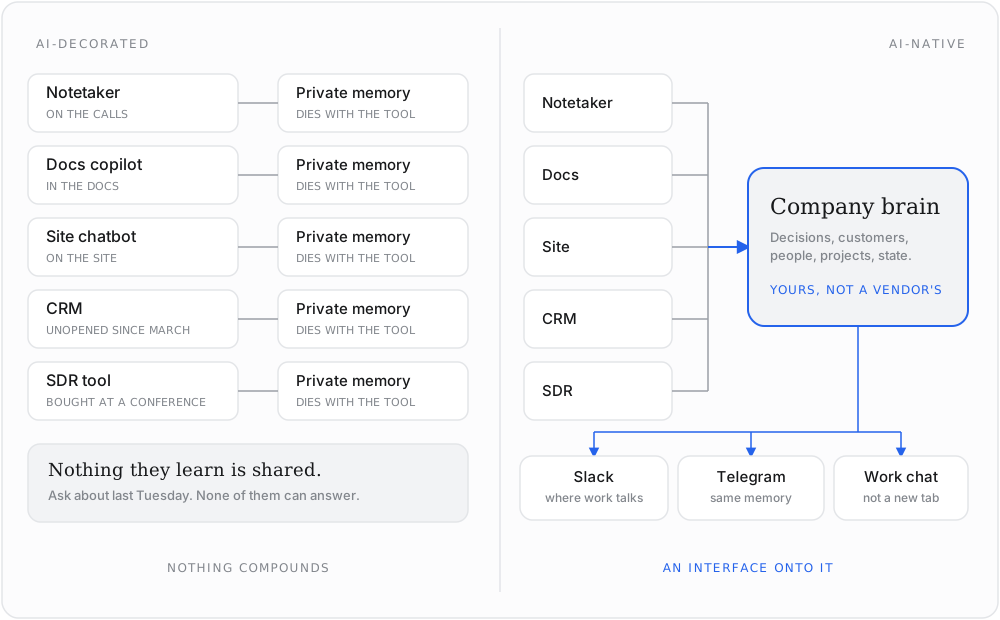
Each copilot learns something real, then takes it to the grave. The company brain is the one place they can all read.
Your context outlives every model you’ll ever use
The best model keeps changing hands. That churn isn’t a phase; it’s the shape of the industry.
Every time you put your company’s knowledge inside a vendor’s tool, you’ve bet that vendor keeps winning — indefinitely. The context is what makes the tool useful, and the context doesn’t come out when you leave.
The company brain inverts that. Your history sits in a layer you own. The model consumes it; it doesn’t own it. Something better ships, you point the brain at it and keep going. No migration. No re-teaching. No “we’re a [vendor] shop” three years after they stopped being best.
This isn’t really an AI argument. It’s a supplier argument — and you already know the answer. You would never let one supplier hold the only copy of your operating knowledge. People are doing exactly that with AI because it feels like magic.
Models are commoditising. Context isn’t. Own the part that doesn’t.
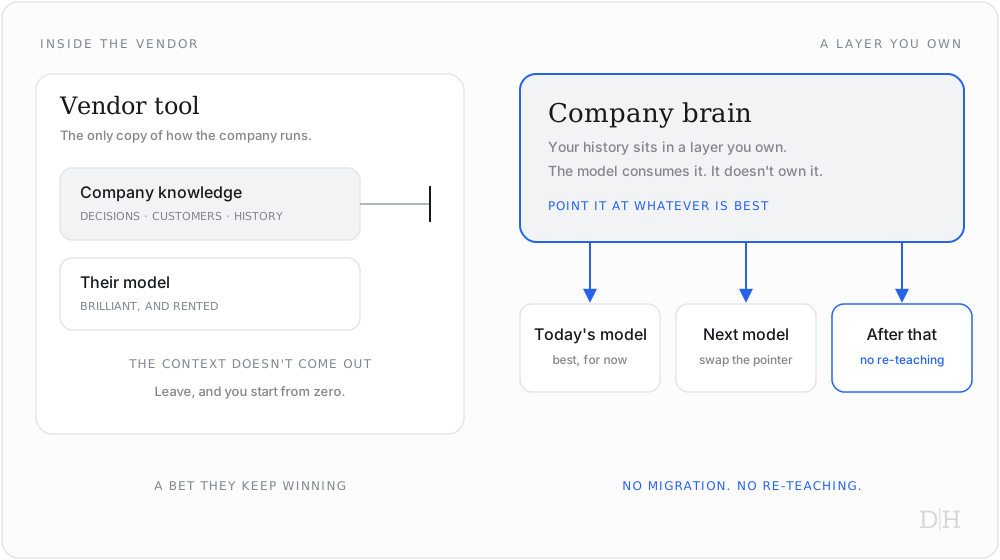
Put the knowledge inside a vendor’s tool and it doesn’t come out. Own the context, and you point the brain at whichever model is best.
Here’s what that looks like in practice. Someone asks: why did we kill the Q2 expansion with Acme? The brain answers in one place: the call notes from May 14, the decision logged that afternoon, the owner, the follow-up that never shipped. No Slack archaeology. No “who has the latest?” Twelve copilots can’t do that. One brain can.
The floor — without these you’re AI-decorated, not AI-native
- The company brain. Decisions, customers, people, projects, current state — yours, not a vendor’s.
- Automatic capture. Meetings, email, chat, CRM, docs, tickets, calls. If a human has to remember to write it down, it doesn’t get written down.
- An agent where people already talk. Slack, Telegram, wherever work happens — not a new tab with its own login.
The operating layer
- A website that updates itself — change content by asking, not by filing a ticket.
- Support: AI first, human on escalation — every transcript flows back into the brain.
- Outbound and marketing as a system — personalization from real context, not a scraped list.
- Every sales call recorded, graded, and coached — AI audits all of them; managers coach the edge.
- Internal ops — onboarding, SOPs, and reports from the brain, not Friday scramble.
- Build capability in-house — “waiting on engineering” stops being the bottleneck.
- Governance — permissions, audit trail, facts in the brain not in DMs.
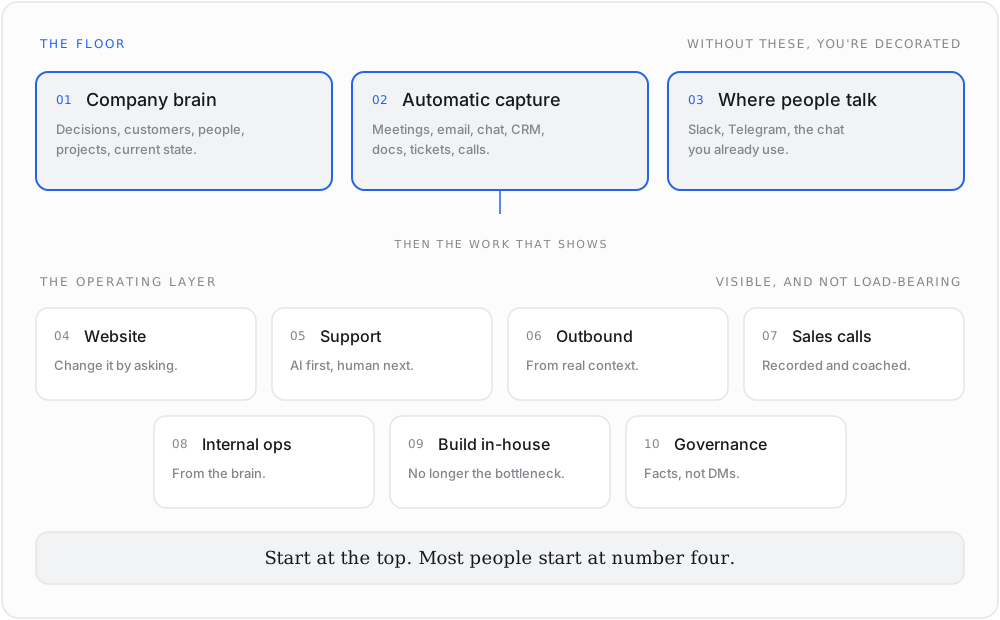
The floor is what makes the difference. Most people start at number four, because the operating layer is the part you can see.
Three tests for whether it’s real
- Is the default “AI does it first, human reviews” — or “human does it, AI helps”? Only the first changes your cost structure.
- Has headcount stopped scaling with volume? If you still hire linearly with customers, nothing structural changed.
- Does state live in one place you own? If the answer is “it’s in the tool,” you have a filing problem, not an AI strategy.
Start at the top of the list. Most people start at number four because it’s visible — then wonder why year two looks like year one, just with more subscriptions.
If you want the next layer — how to stand up the brain without boiling the ocean — say so and I’ll write that next.