I recently watched a video called Ibn Arabi’s Map of the Soul: The Seven Levels of Nafs. Its hook is blunt: most people die at level two, and only saints reach level seven.
I became Muslim more than 25 years ago. Lately I have been digging much deeper into Sufism, because at its heart it is a path of love, and love is exactly what I have been building everything around with Love Not Fear.
So the map itself was not new to me. What struck me was how much it sounds like another map that has shaped how a lot of leaders think about growth: Spiral Dynamics.
Both claim to describe how a human being grows. Both use levels. Both say most of us are stuck lower than we think. So are they the same map in different clothes?
No. And the difference is the most useful thing I know about personal growth.
The seven stations of the nafs
In Sufism, the nafs is the self: the ego, the part of you that wants, grasps, defends and compares. The path is not about destroying it. It is about refining it until it stops running the show.
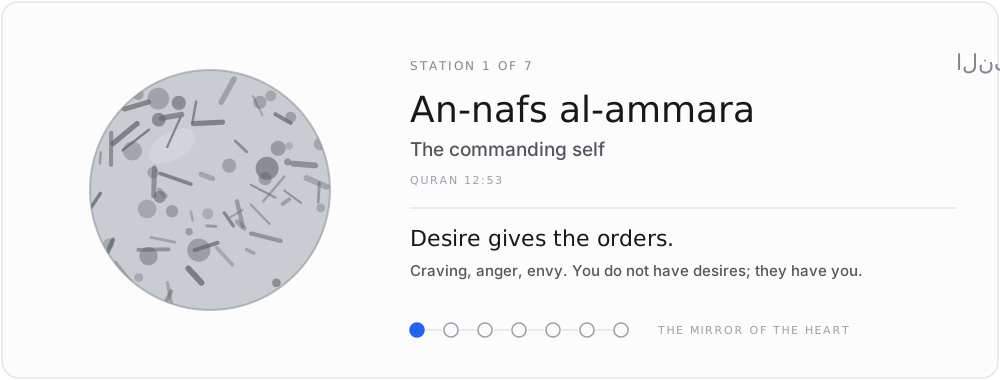
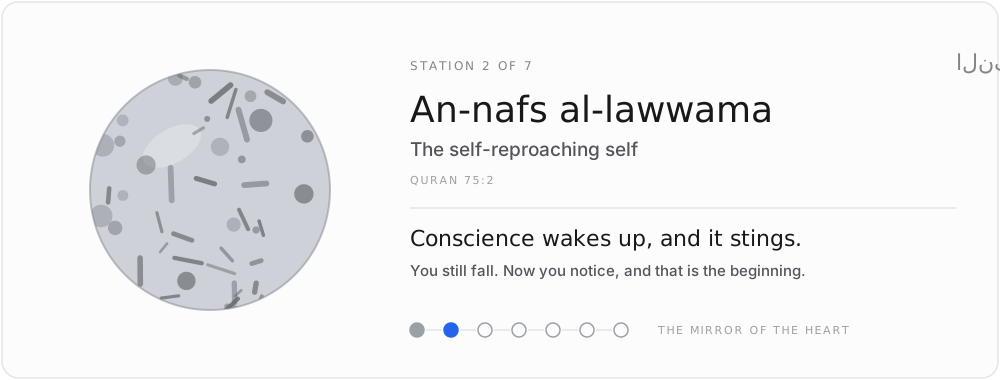
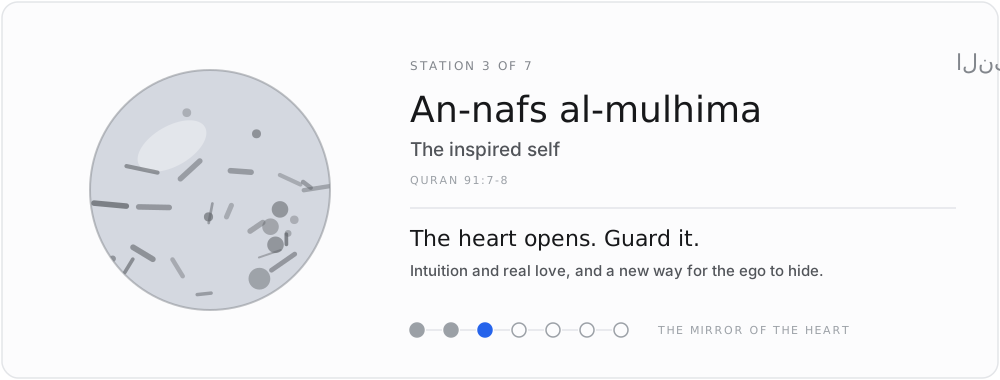
The classical map has seven stations, most of them named in the Quran. The Sufis often describe the heart as a mirror. Every station polishes away a little more rust, until the mirror reflects nothing but light. The pictures below follow that image.
1. An-nafs al-ammara, the commanding self
Quran 12:53. The self that orders you around. Craving, anger, envy, appetite. You do not have desires; they have you. Most people here do not know it, because they have never seen anything else.
2. An-nafs al-lawwama, the self-reproaching self
Quran 75:2. Conscience wakes up. You still fall, but now you notice and it stings. This is the level the video says most people die at: aware enough to feel the gap, not yet free of it. It is uncomfortable, and it is the beginning of everything.
3. An-nafs al-mulhima, the inspired self
Quran 91:7-8. The heart opens. Intuition, real love, the taste of something beyond you. Also a dangerous station, because spiritual experience can feed the ego as easily as it quiets it.
4. An-nafs al-mutma’inna, the tranquil self
Quran 89:27. Peace that does not depend on circumstances. The storms still come. You are no longer the storm.
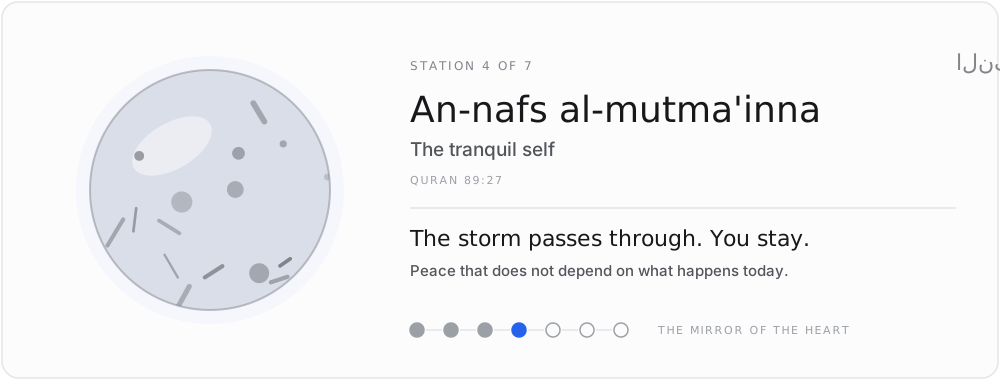
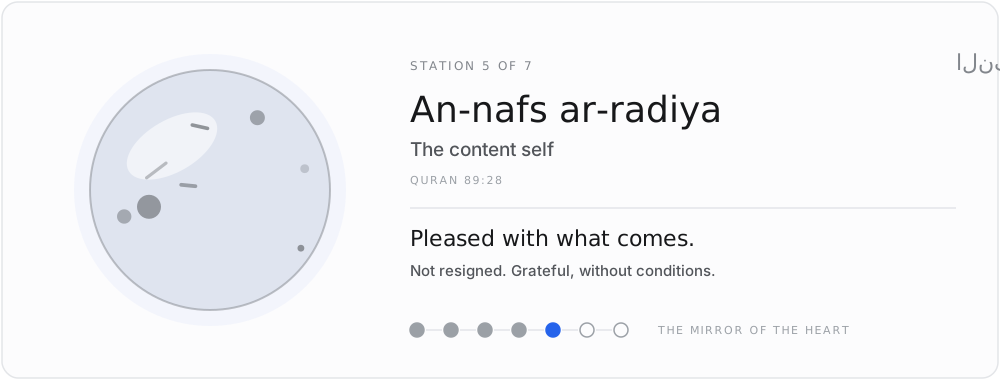
5. An-nafs ar-radiya, the content self
Quran 89:28. You are pleased with what comes, not resigned to it. Gratitude without conditions.
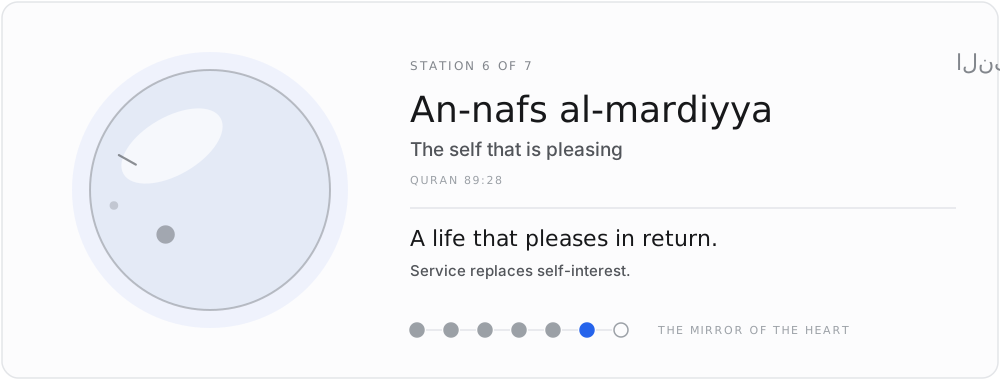
6. An-nafs al-mardiyya, the self that is pleasing
Quran 89:28. Not only are you content with God; your life has become something pleasing in return. Service replaces self-interest.
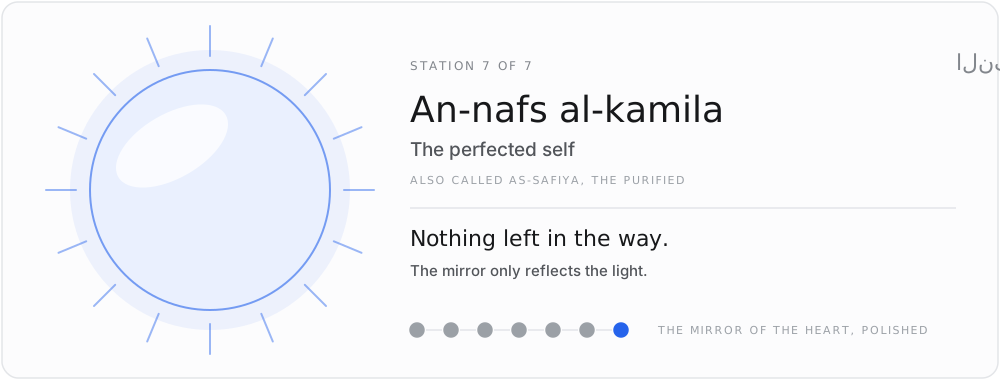
7. An-nafs al-kamila or as-safiya, the perfected or purified self
The ego is transparent. What moves through the person is no longer them.
A small note for accuracy: the video frames this as Ibn Arabi’s map. Ibn Arabi wrote about the soul’s stations at great depth, but the neat seven-level ladder is usually taught through the later Sufi orders, which built it on those Quranic names. The attribution matters less than the map, and the map is centuries old.
Spiral Dynamics in one breath
Spiral Dynamics comes from the psychologist Clare Graves, and was popularised by Don Beck and Christopher Cowan in 1996. It describes the value systems that people and cultures move through as their life conditions get more complex. Each level has a color:
- Beige: survival.
- Purple: tribe, ritual, belonging.
- Red: power, impulse, “I take what I want.”
- Blue: order, rules, duty, the one right way.
- Orange: achievement, science, strategy, winning.
- Green: community, equality, feelings, consensus.
- Yellow: systems thinking, flexibility, integrating all the previous levels.
- Turquoise: holistic, a felt sense that everything is connected.
The spiral swings between two poles. Beige, Red, Orange and Yellow are about expressing the self, the “I”. Purple, Blue, Green and Turquoise are about belonging to something larger, the “we”. Graves saw the jump from Green to Yellow as the biggest of all: the start of a second tier, where you can see and value every earlier level instead of fighting it.
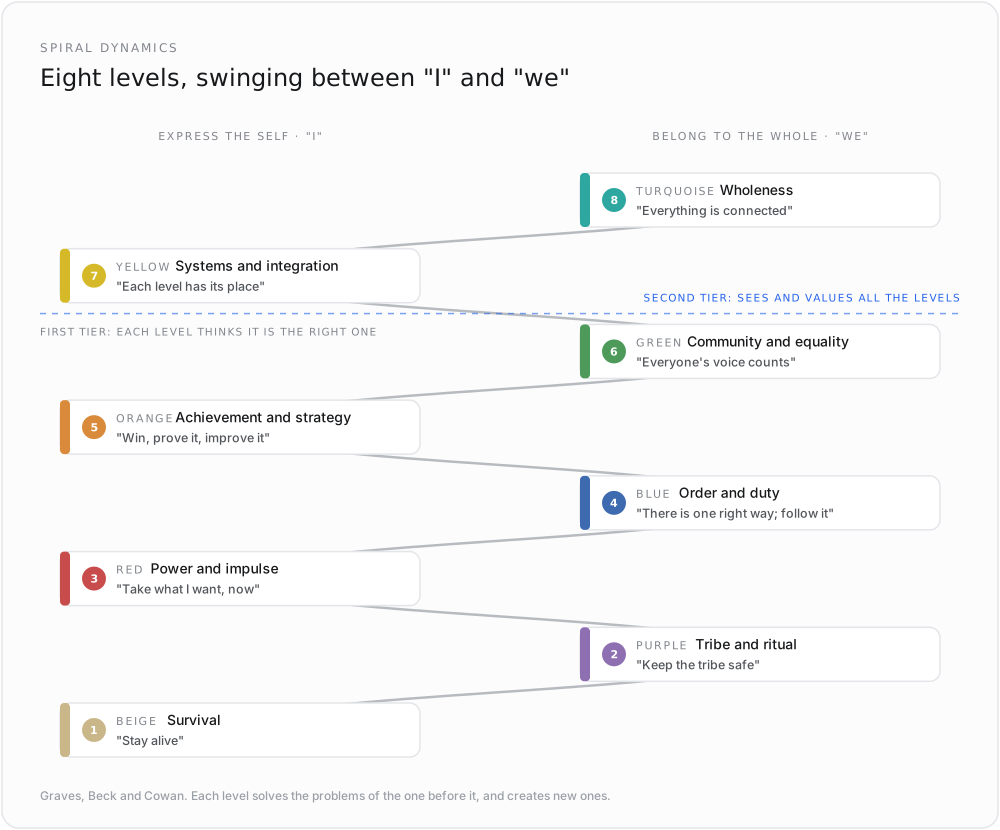
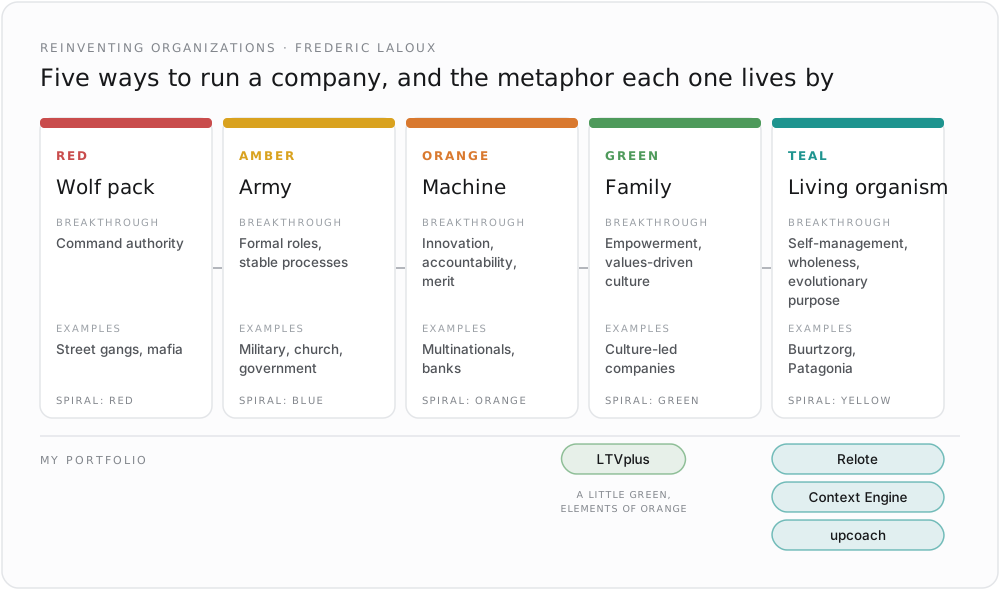
The key insight is that each level solves the problems of the one before it, and creates new ones. I see this in my own portfolio. The companies are not all run the same way. LTVplus is a little Green, with elements of Orange: people-first, but with real targets, growth and performance. Others, like Relote, Context Engine and upcoach, are run Teal, Frederic Laloux’s word, from Reinventing Organizations, for self-managing, purpose-led companies. Teal sits roughly where Yellow sits on the spiral. Neither is wrong. Each fits a different stage and a different kind of work.
Laloux gives each way of running a company a metaphor. Red is a wolf pack. Amber is an army. Orange is a machine. Green is a family. Teal is a living organism, where people manage themselves, bring their whole selves to work, and let the purpose steer.
Where the two maps rhyme
Lay them side by side and the echoes are hard to miss:
| Nafs | Spiral Dynamics | The shared idea |
|---|---|---|
| Ammara, the commanding self | Red, with Beige and Purple underneath | Impulse runs the person |
| Lawwama, the self-reproaching self | Blue, then Orange | Conscience, rules, striving, the inner critic |
| Mulhima, the inspired self | Green | The heart opens, empathy, meaning |
| Mutma’inna, the tranquil self | Yellow | Calm, integration, no longer reactive |
| Radiya, mardiyya, kamila | Turquoise and beyond | Unity, service, the self becomes transparent |
Both maps agree that growth is not more of the same. Each step is a different relationship with yourself. Both agree that you cannot skip steps. Both agree that the early levels feel like the whole world while you are in them.
And both have a sting in the tail: the level you are proudest of is often where you are stuck.
Where they part ways
Here is where it gets interesting. The table above is a loose rhyme, not an equation, for three reasons.
They measure different things. Spiral Dynamics maps how you think: your worldview, your values, how much complexity you can hold. The nafs maps how much your ego is running you. Those are two different axes. You can be a brilliant Yellow systems thinker whose nafs is fully ammara: sophisticated, and still commanded by envy and appetite. And you can meet a grandmother in an Anatolian village who has never heard of systems thinking, whose nafs is mutma’inna. You feel it the moment you sit with her.
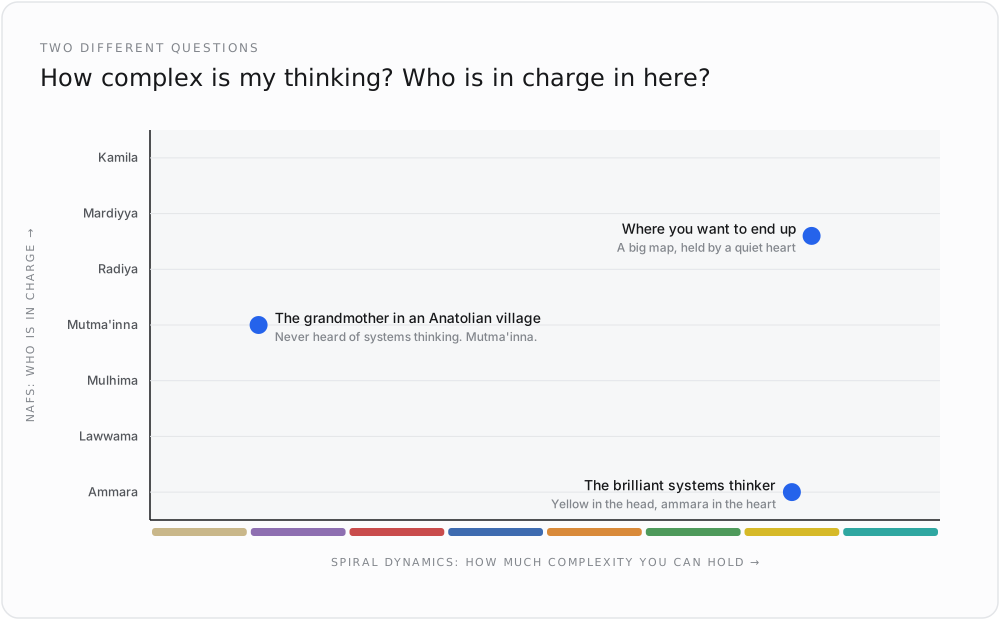
Ken Wilber made a similar point about the difference between stages of development and states of consciousness. Sufism is sharper still: the question is not how big your map of the world is, but who is holding the map.
The same goes for companies. You can give a team a Teal structure, with no bosses, full transparency and a real purpose, and it still will not run on love if the people in it are run by their nafs. Structure can make room for a better self. It cannot do the refining for you.
They point in opposite directions. Spiral Dynamics grows by adding: more perspectives, more complexity, more capacity. The Sufi path grows by subtracting. The goal is not a bigger self but a thinner one, until at the end there is almost nothing left in the way. The Sufis call that fana, passing away of the self. No developmental psychology has a stage for that, because psychology still needs someone there to develop.
They grow in different ways. In Spiral Dynamics, you move up when your life conditions change and your current level can no longer cope. It happens to you. On the Sufi path, the stations are worked for: remembrance (dhikr), the company of a teacher and fellow travellers (sohbet), service, and fighting your own nafs, which the tradition calls the greater struggle. And even then, the Sufis insist, the next station is a gift, not a reward.
What the path teaches that the model cannot
The deeper I dig into Sufism, the more I think the thing to trust most is not the map. It is what the map does to you once you stop treating it as a scoreboard.
The first trap with any levels model is using it to rank people. Spiral Dynamics fans do it with colors. Spiritual people do it with stations. Both are ammara wearing a nicer outfit.
The second trap is thinking you live on one level. You do not. You can be tranquil in meditation and commanding in traffic. Growth is less about reaching a level than about how quickly you notice you have slipped, and how gently you come back.
And the third: the lower levels are not the enemy. Lawwama, the painful self-reproach, is the door. If you feel the gap between who you are and who you could be, that is not failure. That is the path starting.
Love, not fear
This is also why Sufism fits so naturally with Love Not Fear, and with the idea that every major religion says “fear not”.
The commanding self runs on fear: fear of missing out, of not having enough, of not being enough. Every station up the ladder is a little less fear and a little more love. The Quran describes where it ends: “The friends of God have no fear, nor shall they grieve” (10:62). The tranquil self is what that feels like from the inside.
Spiral Dynamics will help you understand your team, your market and your culture. Use it. But if you want to know whether you are actually growing, ask the older question.
Not “how complex is my thinking?”
But “who is in charge in here, my nafs or my heart?”